Our License to Innovate in Healthcare
Gabriel Mecklenburg, CTO · March 5, 2026
•6 min read
If you look at the landscape of "AI in Healthcare" right now, you’ll see a lot of noise. But if you look closely at what is actually being built, you’ll notice a pattern: it’s almost entirely about automating the back office.
It’s AI for medical coding. AI for revenue cycle management (getting bills paid). AI scribes that listen to a doctor and write notes so the doctor can bill for the visit faster. "ChatGPT for doctors" paid for with pharma ads.
Don’t get me wrong, efficiency is great. But like the Henry Ford saying goes, this is "building a faster horse". You’re making the legacy system faster, but you aren’t changing the fundamental product. You aren’t actually delivering care.
At Hinge Health, we are doing something fundamentally different. We are using technology and AI to automate the delivery of care itself.
To an engineer outside of healthcare, the distinction might seem subtle. But commercially and technically, it is the difference between building a better taxi meter and building an autonomous vehicle.
Here is why Hinge Health is uniquely positioned to do this, and why it’s the most exciting engineering challenge in the industry.
The "Fee-For-Service" Trap vs. Our License to Innovate
To understand why so little technology actually touches patients in traditional healthcare, you have to follow the money.
Most of healthcare runs on Fee-For-Service. Doctors and hospital systems get paid for specific activities, usually tied to human time. A hospital can bill you "30 minutes of in-person physical therapy with a licensed PT"; but if they were to invent an AI that fixes your back pain in 5 minutes without a human, their revenue goes to zero.
They literally cannot afford to automate care. They are incentivized to maximize billable human interactions.
Hinge Health has spent the last decade building a different foundation. We don’t get paid through traditional reimbursement mechanisms. We sell outcome-based enterprise contracts to 2,800+ large enterprise customers, covering 25 million people, and have deep partnerships with 60+ health plans and pharmacy benefit managers.
Our contracts effectively say: "We’ll put 100% of our fees at risk – we don’t get paid unless your people get better and your health care costs go down. In return, you give us a lot of freedom to innovate in how we deliver those outcomes."
This is our License to Innovate. It aligns our business incentives with engineering innovation. If we can build AI that delivers better care faster, our margins go up, our clients save money, and patients get better faster. Everyone wins.
The Vision: Towards AI Care Providers
Much of the digital health industry operates in a model where technology stays in the realm of "wellness", and connects patients to human providers for true medical care. We are starting to build true AI Care Providers, where technology delivers the care, and humans train and oversee these AI agents, and handle edge cases.
This isn’t sci-fi, it’s our roadmap:
- Computer Vision: Our CV models are best-in-world for 3D human pose estimation on edge devices, giving the AI precise ground-truth about how our patients are moving.
- The World Model: We are building a Neuro-Symbolic architecture that fuses deep learning with a rigorous knowledge graph. This allows agentic reasoning that is transparent & safe, without losing what makes AI systems so powerful.
- The Agentic Harness: This is the system’s executive function. It decouples perception from policy, using a hierarchy of heuristics to make real-time decisions under uncertainty.
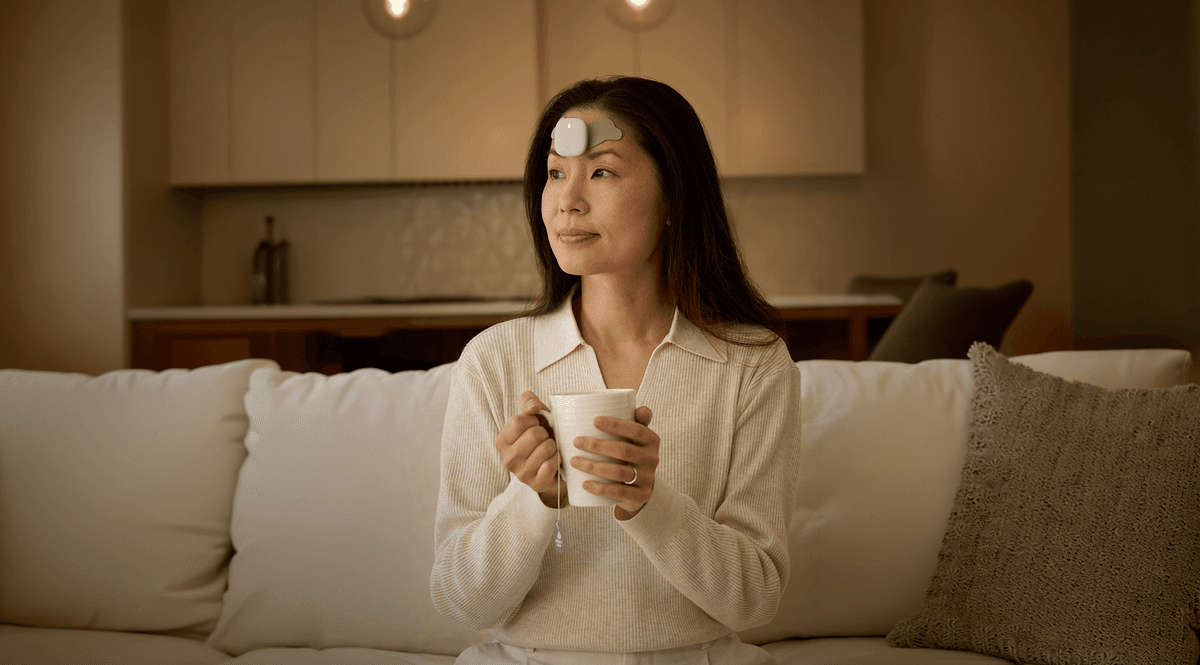
- Regulatory-Grade Rigor: We aren’t just shipping beta features; we are building systems robust enough for regulatory clearance. We’ve already done this with Enso (our FDA-cleared wearable for pain relief), and we are applying that same rigor to our AI care delivery.
This technical foundation evolves us towards a true clinical care provider. We are moving beyond just MSK into broader health concerns, and we are doing it by encoding the wisdom of our best clinicians into software.
We are not replacing human care. In fact, we are adding more human care where it matters most (like our new HingeSelect in-person network), while the AI will handle the high-frequency monitoring and guidance that no human could physically provide 24/7.
Why Hinge Health? (The Moat)
You might ask: "Can’t OpenAI or a startup just build this?"
They can build the model, but they can’t easily deploy it as healthcare. To automate care safely at scale, you need four things that constitute our durable moat:
- Proprietary Data: We have the largest, proprietary dataset of musculoskeletal care in the world. We can train our models on 100 million therapy sessions and associated clinical outcomes, and tens of thousands of hours of PT and health coaching visits, not just scraped medical textbooks. All in compliance with privacy laws and contractual obligations of course.
- Regulatory & Commercial Structure: We have structured our contracts to allow for outcomes-based care delivery, decoupling us from the fee-for-service constraints.
- Distribution & Trust: We have 100% retention across our partners (including the 5 largest health plans and the 3 largest pharmacy benefit managers) and 97% annual retention across our employer clients. We have the "rails" into the healthcare system that would take a new entrant a decade to replicate.
- Clinical outcomes: We have published over 20 peer reviewed articles and ROI-analyses proving we work. A two-year outcome study would still take AI … two years to complete, because it needs to follow the costs of human care.
The Opportunity
We are doubling down on this vision. We are investing heavily in member-facing AI features that don’t just support care but deliver the care.
If you’re an engineer who wants to solve hard problems, you could go work at an ad-tech company and optimize click-through rates.
Or, you can come to Hinge Health. You’ll get to use that same "license to innovate" to build technology that actually treats people, in a business model that rewards you for doing it. Like running real-time pose estimation on edge devices, architecting "Neuro-Symbolic" reasoning engines that combine deep learning with explicit clinical logic, or orchestrating multi-agent state across weeks of care.
We’re building the future of automated care. Come help us ship it.